
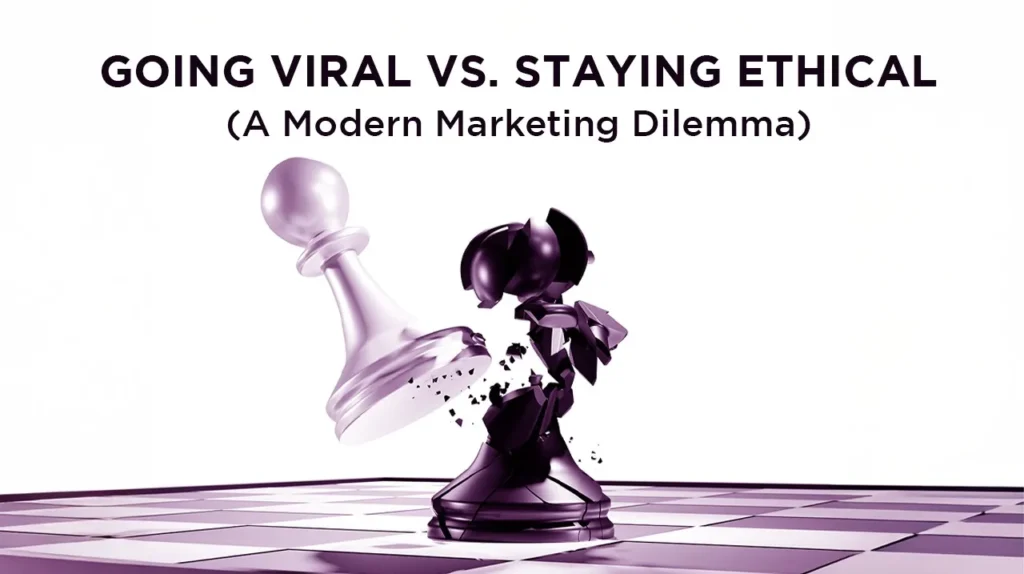
Introduction:
These days, it feels like everything’s about making money. Brands are racing to grow, go viral, and grab attention—no matter the cost. In that race, ethics often take a back seat. It’s not just about what you sell anymore, but how far you’re willing to go to sell it.
That’s exactly what happened during Ramadan 2025, when Belban dropped an ad that took a clear shot at El Abd, one of Egypt’s most loved dessert shops. The ad didn’t just mock the long lines outside El Abd—it went so far as to poke fun at the brand’s founder. And just like that, the internet exploded.
This brings up an important question: Where do we draw the line in marketing? In this article, we’ll talk about:
– What ethical marketing actually means
– How some brands cross the line
– What “unfair competition” looks like
– And whether this kind of thing is becoming the norm
1. What is “ethical marketing” anyway?
At its core, ethical marketing is about respect—respect for your audience’s intelligence, emotions, and privacy. It’s about being honest, not manipulative. It’s about promoting a product without lying, tricking, or guilt-tripping people into buying it.
Sounds simple, right? But in real life, it’s not always that clear.
2. When marketing gets shady
Here are a few ways brands cross the line:
– Stretching the truth: We’ve all seen those ads that promise magic results, but reality tells a different story. Example: Remember when Volkswagen was exposed for cheating emissions tests? They marketed their cars as eco-friendly—while hiding the truth.
– Playing on insecurities: Some ads are designed to make you feel “not enough”—not pretty enough, not successful enough, not smart enough—unless you buy their product.
– Targeting vulnerable people: Like ads that push unhealthy snacks on kids, or apps that encourage overspending through in-game purchases.
3. When competition goes too far
Competition is healthy—it pushes brands to innovate and do better. But sometimes, it crosses the line.
– Taking shots at rivals: We’ve all seen brands mock their competitors. Example: The classic Pepsi vs. Coca-Cola battles—funny, yes, but still toeing that ethical line.
– Copying other brands: Some companies mimic the look and feel of more popular brands to confuse customers and ride their wave of success.
– Outshouting instead of outsmarting: Some businesses rely on flooding the internet with ads just to block competitors, instead of improving their own offerings.
4. Real Talk: Belban vs. El Abd
Let’s go back to that Belban ad in Ramadan 2025. What started as a joke about long lines outside El Abd quickly turned into something deeper. People weren’t just laughing—they were divided. The ad took a jab at the founder of El Abd, and for many, that crossed a red line.
Some people defended it, saying, “That’s just smart marketing!” Others felt it was disrespectful—especially when the person behind a brand gets dragged into the joke.
What made it worse? The fact that El Abd is a local icon. People grew up with it. It’s more than just a store—it’s a memory.
5. Is this kind of marketing the new normal?
A lot of people say yes. In Egypt, we’ve gotten used to seeing brands tease each other. Think of the back-and-forth ads between Etisalat and Vodafone—the colors, the hints, the playful digs. We laugh, we share the ads, and the brands stay top of mind.
It happens worldwide too—Burger King vs. McDonald’s, Apple vs. Samsung. But there’s a difference between cheeky and cheap. A clever wink is one thing. A personal attack? That’s another story.
Final Thoughts: Where do you draw the line?
In a world where everyone’s fighting for attention, it’s easy to think that “viral” equals “successful.” But is it worth it if people stop trusting your brand? If the joke lands but the respect disappears?
Great marketing isn’t just about being loud—it’s about being right. Respectful. Creative. Smart. Human.
So we’ll leave you with this: Is it okay for brands to roast their rivals if it’s funny? Or should there always be a line that marketing never crosses—no matter how crowded the market gets?